


Product Description +
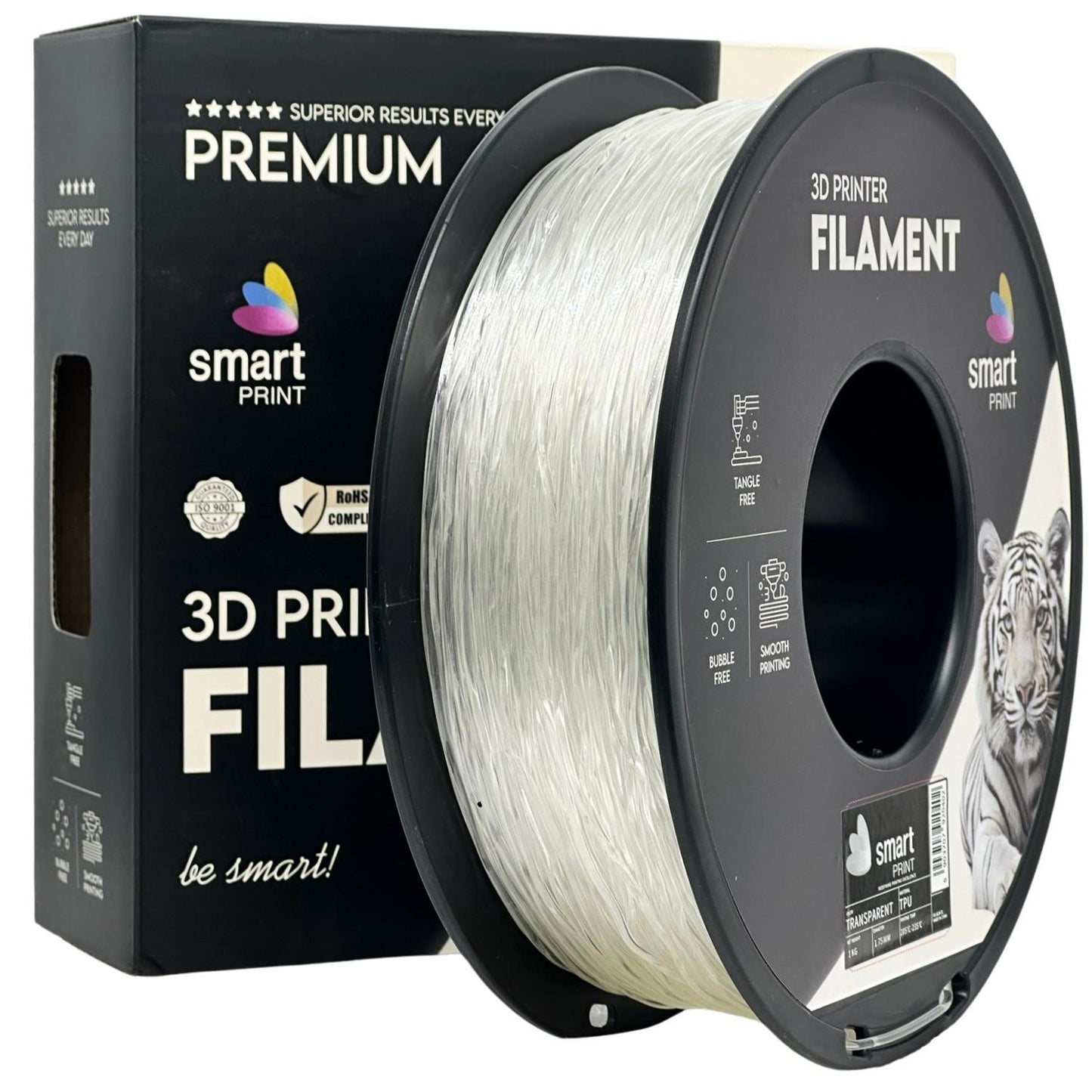
Smart Print TPU95A 1kg 1.75 mm
Flexible TPU95A filament for elastic FDM/FFF 3D printed parts
Product Description
Smart Print TPU95A is a flexible filament for FDM/FFF 3D printers. It is suitable for elastic components, seals, protective parts, non-slip feet, flexible mounts, and applications where flexibility and abrasion resistance are required.
With a Shore hardness of 95A, TPU95A offers a good balance between flexibility and printability. Compared to very soft TPU materials, it is easier to process on many printers, but still requires adjusted printing parameters.
For reliable results, printing speed and retraction should be reduced. A direct-drive extruder is advantageous for flexible materials; with Bowden systems, printing should be particularly slow and even.
TPU is sensitive to moisture. The filament should be stored dry and, if necessary, dried in a suitable filament dryer or drying device before printing.
Technical Data
| Brand: | Smart Print |
| Product Line: | TPU |
| Material: | TPU95A |
| Diameter: | 1.75 mm |
| Weight: | 1 kg |
| Print Temperature: | 200 °C - 230 °C |
| Bed Temperature: | 50 °C - 60 °C |
| Print Speed: | 20 mm/s - 40 mm/s |
| Fan: | On |
| Drying Settings: | 60 °C for 6h |
| Additional features: |
Note
Color reproduction may vary slightly depending on screen display, lighting, and batch. Print values are guidelines and may need to be adjusted depending on the printer, nozzle, component, and material condition.
Shipping & Returns +
Shipping: Available shipping options and rates are shown during checkout.
Returns: The return and cancellation terms provided in this store apply.
If you have questions about shipping, delivery times or returns, we are happy to help.
Why this product? +
This product was selected for our store because it combines quality, everyday usability and reliable 3D printing results.
Especially with filaments, we focus on trusted brands, consistent quality and products that perform well in practical use.
Frequently Asked Questions about TPU Filament
What is TPU filament used for?
TPU is used for flexible parts such as protective covers, seals, grips, feet, dampers and components that need elasticity.
Is TPU filament flexible?
Yes. TPU is a flexible filament. Depending on the exact hardness, it can be used for soft, rubber-like or slightly flexible parts.
Is TPU difficult to print?
TPU is more demanding than rigid materials such as PLA or PETG. Slower print speeds, dry filament and a well-guided filament path help achieve reliable results.
Does TPU need a direct-drive extruder?
A direct-drive extruder is recommended for TPU because it controls flexible filament more precisely. Some Bowden printers can also print TPU, but usually at lower speeds.
Why should TPU be printed slowly?
Flexible filament can compress or bend in the filament path. Slower print speeds reduce feeding issues and improve dimensional accuracy.
How should TPU filament be stored?
TPU should be stored dry and protected from humidity. Moist TPU can cause stringing, bubbles and rough surfaces during printing.