


Product Description +
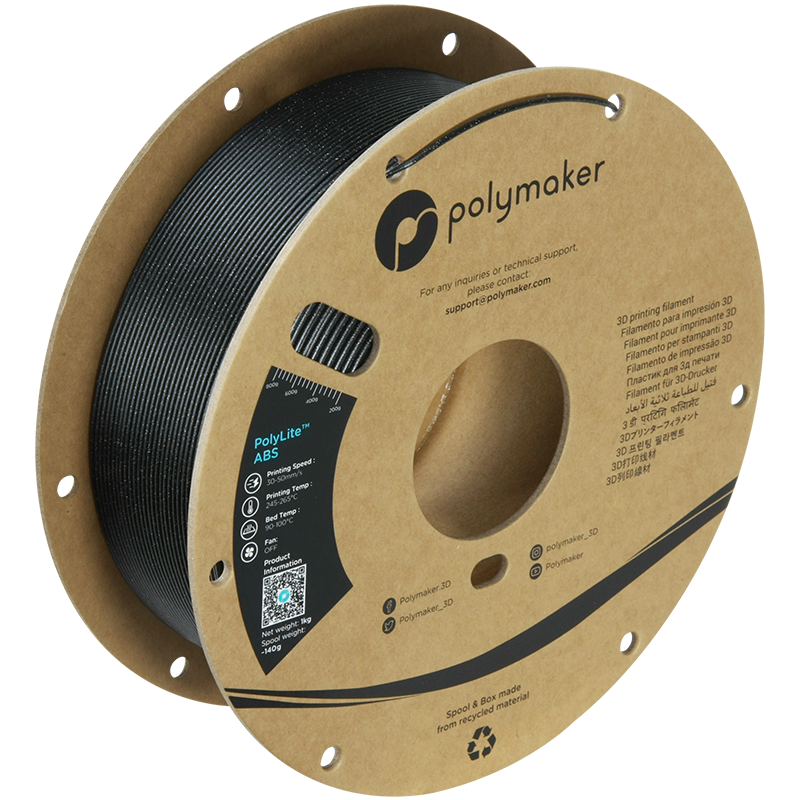
Polymaker PolyLite ABS 1kg 1.75 mm
ABS filament for stable, resilient, and heat-resistant FDM/FFF 3D printed parts
Product Description
Polymaker PolyLite ABS is an engineering ABS filament for FDM/FFF 3D printers. It is suitable for functional components, housings, brackets, prototypes, and applications requiring mechanical strength and heat resistance.
Compared to PLA, ABS requires higher printing temperatures and benefits from an enclosed build chamber. A stable, warm build chamber can help reduce warping and achieve more consistent print results.
The filament should be stored dry and protected from moisture. If the material has absorbed moisture, it is recommended to dry it before printing in a suitable filament dryer or drying device.
Technical Data
| Brand: | Polymaker |
| Product line: | PolyLite ABS |
| Material: | ABS |
| Diameter: | 1.75 mm |
| Weight: | depending on variant |
| Printing temperature: | 245 °C - 265 °C |
| Bed temperature: | 90 °C - 100 °C |
| Printing speed: | 30 mm/s - 50 mm/s |
| Fan: | OFF |
| Drying settings: | 70 °C for 6h, only if moisture absorbed |
| Other features: |
Note
Depending on screen display, lighting, and batch, color reproduction may vary slightly. Print values are guidelines and may need to be adjusted depending on the printer, nozzle, component, and material condition.
Shipping & Returns +
Shipping: Available shipping options and rates are shown during checkout.
Returns: The return and cancellation terms provided in this store apply.
If you have questions about shipping, delivery times or returns, we are happy to help.
Why this product? +
This product was selected for our store because it combines quality, everyday usability and reliable 3D printing results.
Especially with filaments, we focus on trusted brands, consistent quality and products that perform well in practical use.
Frequently Asked Questions about ABS Filament
Is ABS filament suitable for functional parts?
Yes. ABS is often used for functional parts, housings and prototypes that require toughness, durability and improved heat resistance.
Does ABS require an enclosed 3D printer?
An enclosed printer or a warm build chamber is strongly recommended. It helps reduce warping and improves layer adhesion.
Is ABS beginner-friendly?
ABS is more demanding than PLA or PETG. It requires higher printing temperatures, good bed adhesion and controlled cooling.
Why does ABS warp during printing?
ABS can shrink while cooling. If the print cools unevenly, corners may lift from the build plate. A warm, stable printing environment helps reduce this effect.
Is ABS heat-resistant?
ABS offers better heat resistance than PLA and is suitable for many technical applications. For outdoor use, ASA is often the better choice because of its UV resistance.
What is the difference between ABS and ASA?
ABS is a tough technical material for functional parts. ASA is similar in many ways but offers better UV and weather resistance, making it more suitable for outdoor applications.