


Product Description +
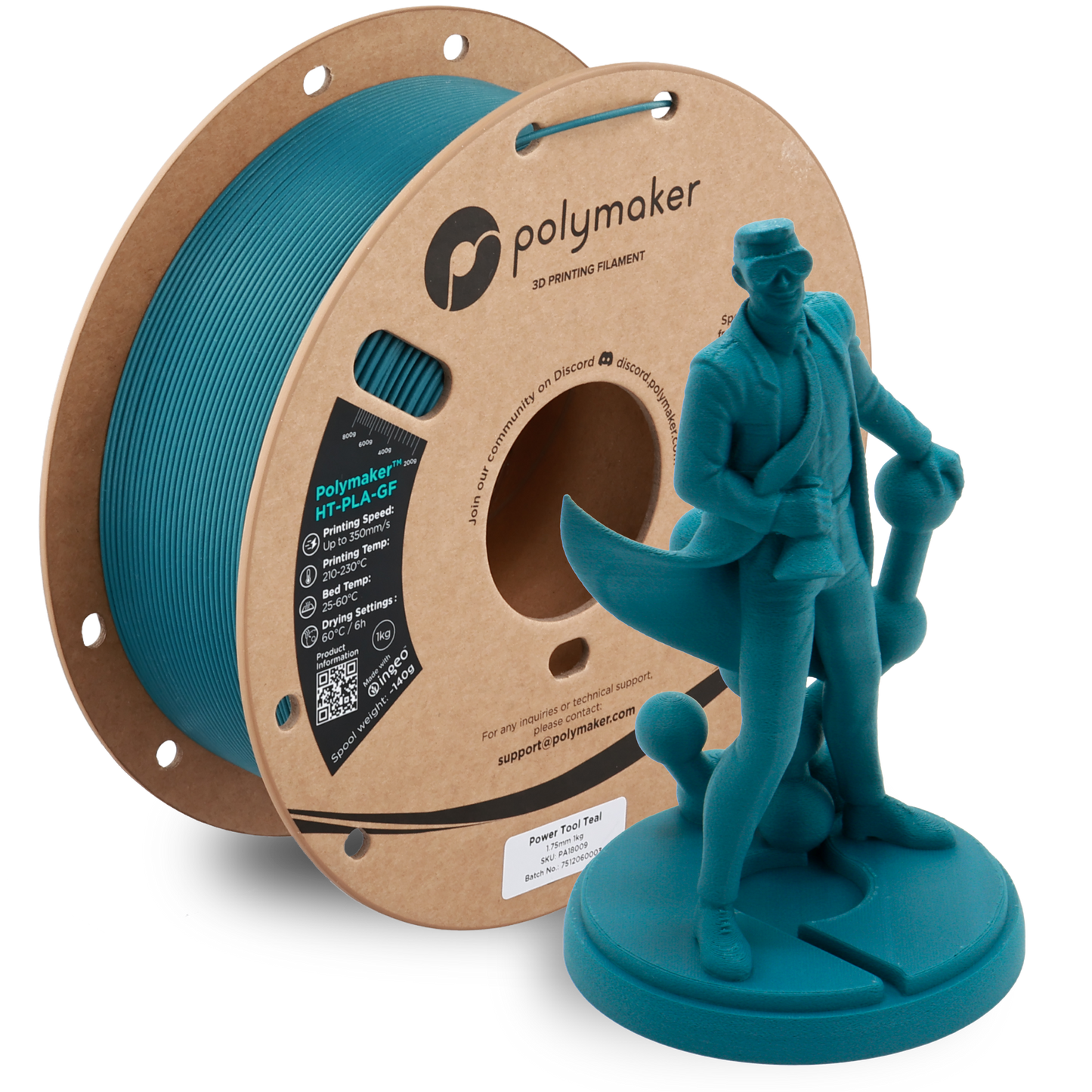
Polymaker HT-PLA-GF 1kg 1.75mm
Glass fiber reinforced HT-PLA filament for dimensionally stable 3D printed parts
Product Description
Polymaker HT-PLA-GF combines HT-PLA with glass fiber reinforcement. This results in stiffer and more dimensionally stable components than with many classic PLA filaments. The material is particularly suitable for functional printed parts, jigs, fixtures, and technical models.
The filament can be processed on many FDM/FFF printers with basic PLA-like settings and supports high printing speeds. For optimal results, temperature, cooling, and speed should be adjusted to the printer and component.
Due to the glass fiber reinforcement, the material is abrasive. For continuous printing, a hardened steel, ruby, or similarly wear-resistant nozzle is recommended.
For reliable printing results, the filament should be stored dry and, if necessary, dried in a suitable filament dryer or drying device before printing. Polymaker recommends drying this material at 60 °C for 6 hours.
Technical Data
| Brand: | Polymaker |
| Product Line: | Polymaker HT-PLA-GF |
| Material: | HT-PLA-GF |
| Diameter: | 1.75 mm |
| Weight: | 1.0 kg |
| Printing Temperature: | 210 °C - 230 °C |
| Bed Temperature: | 25 °C - 60 °C |
| Print Speed: | up to 300 mm/s |
| Cooling: | On |
| Drying: | 60 °C for 6 h |
| Note: | Abrasive filament - hardened nozzle recommended |
Note
Color representation may vary slightly depending on screen display and batch. For optimal results, printing settings should be adjusted to the printer, component, and environment.
Shipping & Returns +
Shipping: Available shipping options and rates are shown during checkout.
Returns: The return and cancellation terms provided in this store apply.
If you have questions about shipping, delivery times or returns, we are happy to help.
Why this product? +
This product was selected for our store because it combines quality, everyday usability and reliable 3D printing results.
Especially with filaments, we focus on trusted brands, consistent quality and products that perform well in practical use.
Frequently Asked Questions about PLA Filament
Is PLA filament beginner-friendly?
Yes. PLA is one of the easiest 3D printing materials to use and is a very good choice for beginners, decorative prints, prototypes and everyday models.
What is PLA filament best used for?
PLA is ideal for visual models, figures, prototypes, decorations, organizers and many general-purpose 3D prints where high heat resistance is not required.
Does PLA need an enclosed printer?
No. PLA usually prints well on open 3D printers and does not normally require an enclosed build chamber.
Is PLA heat-resistant?
PLA has limited heat resistance compared to materials such as PETG, ASA or ABS. It is not the best choice for parts that are exposed to higher temperatures or direct sunlight for long periods.
How should PLA filament be stored?
PLA should be stored dry and protected from moisture. A sealed bag or storage box with desiccant helps maintain consistent print quality.
What is the difference between PLA and PETG?
PLA is usually easier to print and gives very clean visual results. PETG is tougher, less brittle and more suitable for functional parts that need more durability.