

Product Description +
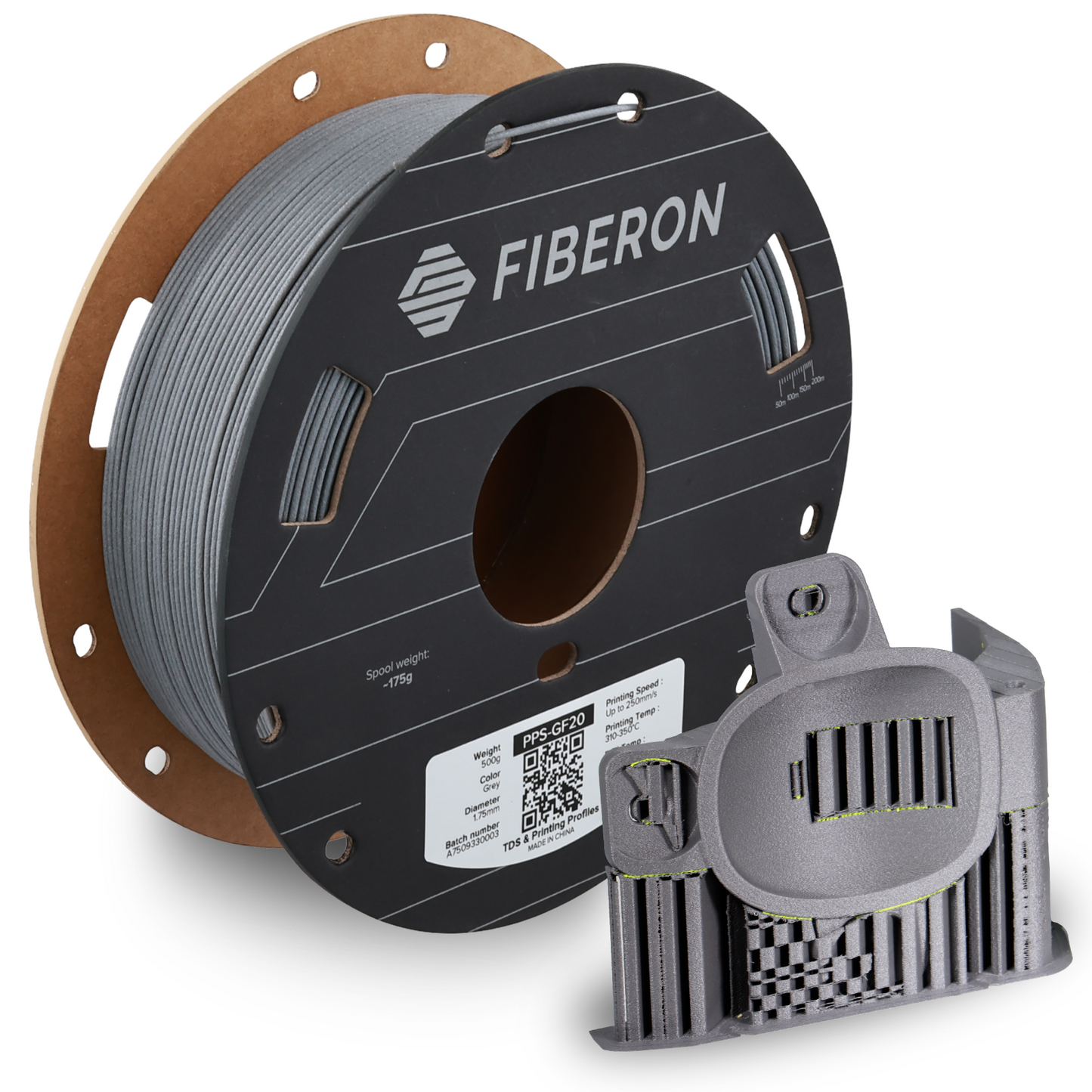
Polymaker Fiberon PPS-GF20 0.5kg 1.75 mm
Glass fiber reinforced PPS filament for high-temperature applications
Product description
Polymaker Fiberon PPS-GF20 is a glass fiber reinforced PPS filament for demanding technical applications. The material is intended for components where high temperature resistance, stiffness, chemical resistance and electrical insulation may be important.
Thanks to the glass fiber reinforcement, PPS-GF20 is suitable for technical housings, brackets, components in industrial environments and components that are to remain dimensionally stable and resilient. The filament is filler-reinforced and therefore abrasive.
An all-metal hotend with a high nozzle temperature and a hardened nozzle are recommended for processing. The material should be stored dry and, if it absorbs moisture, dried in a suitable filament dryer or drying device before printing.
Polymaker also describes a possible post-treatment of the finished component to further improve the thermal properties. This heat treatment relates to the printed component and is to be distinguished from drying the filament before printing.
Technical data
| Brand: | Polymaker |
| Product line: | Fiberon PPS-GF20 |
| Material: | PPS-GF20 |
| Diameter: | 1.75 mm |
| Weight: | 0.5 kg |
| Printing temperature: | 310 °C - 350 °C |
| Bed temperature: | 80 °C - 90 °C |
| Print speed: | up to 250 mm/s |
| Fan: | OFF |
| Drying settings: | 100 °C for 10h, only if moisture absorbed |
| Further properties: |
Note
Color reproduction may vary slightly depending on screen display, lighting and batch. Print values are reference values and may be adjusted depending on the printer, nozzle, component and material condition.
Shipping & Returns +
Shipping: Available shipping options and rates are shown during checkout.
Returns: The return and cancellation terms provided in this store apply.
If you have questions about shipping, delivery times or returns, we are happy to help.
Why this product? +
This product was selected for our store because it combines quality, everyday usability and reliable 3D printing results.
Especially with filaments, we focus on trusted brands, consistent quality and products that perform well in practical use.
Frequently Asked Questions about this Filament
How should filament be stored?
Filament should be stored dry and protected from moisture. If the material has absorbed moisture, drying it before printing can improve print quality.
Are print settings the same for every printer?
No. Temperature, speed, cooling and flow settings may need to be adjusted depending on the printer, nozzle, build plate and material condition.
Which filament is best for beginners?
PLA is usually the easiest material for beginners. PETG is a good next step when more toughness and temperature resistance are needed.
Why is dry filament important?
Moist filament can cause stringing, bubbles, rough surfaces and weak layer adhesion. Dry storage helps keep print quality consistent.
Can every filament be printed on every printer?
Not always. Some materials need higher temperatures, an enclosed build chamber or a specific extruder setup. Always check whether your printer is suitable for the material.
How do I improve print quality?
Good print quality depends on dry filament, suitable temperature settings, correct bed adhesion, calibrated flow and a clean nozzle.