

Product Description +
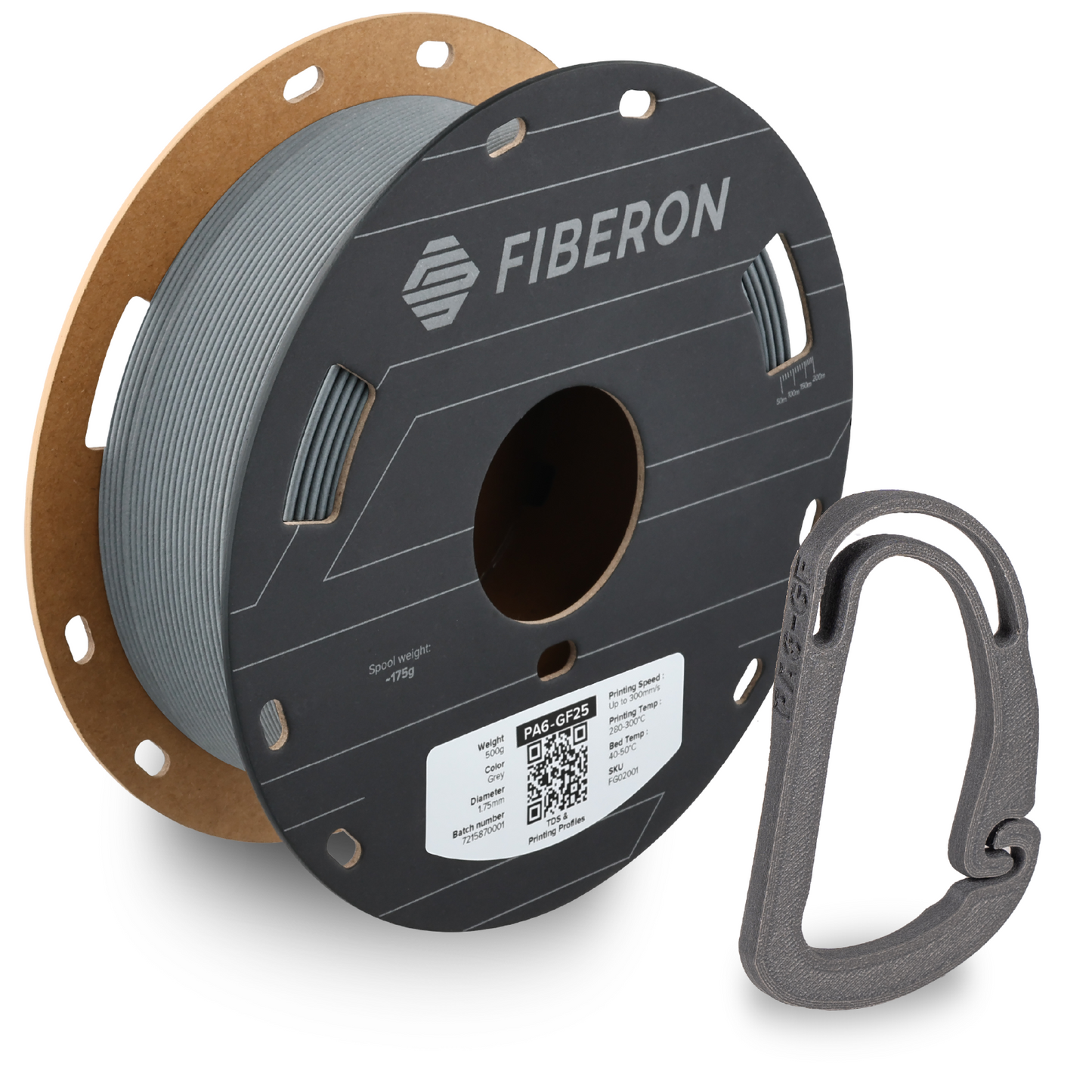
Polymaker Fiberon PA6-GF25 0.5kg 1.75mm
Glass fiber reinforced PA6 filament for technical FDM/FFF prints
Product Description
Polymaker Fiberon PA6-GF25 is a glass fiber reinforced PA6 filament for technical 3D printed parts with high stiffness, strength, and heat resistance. The material is aimed at users who want to print functional parts with demanding mechanical properties.
Thanks to the glass fiber reinforcement, PA6-GF25 is particularly suitable for fixtures, brackets, technical prototypes, and components where dimensional stability and strength are important. Due to the PA6 base material, dry storage is particularly important.
For reliable printing results, if the filament absorbs moisture, it should be dried in a suitable filament dryer or drying device before printing. A hardened nozzle is recommended due to the abrasive glass fiber filling.
Polymaker recommends suitable post-treatment of the finished printed part for maximum mechanical and thermal performance. Printing parameters and post-treatment should be adapted to the printer, component, and intended use.
Technical Data
| Brand: | Polymaker |
| Product Line: | Fiberon PA6-GF25 |
| Material: | PA6-GF25 |
| Diameter: | 1.75 mm |
| Weight: | 0.5 kg |
| Printing Temperature: | 280 °C - 300 °C |
| Bed Temperature: | 40 °C - 50 °C |
| Print Speed: | up to 300 mm/s |
| Fan: | OFF |
| Drying Settings: | 100 °C for 10h or PolyDryer Level 3 for 18h, only if moisture absorbed |
| Additional Features: |
Note
Depending on screen display, lighting and batch, color reproduction may vary slightly. Print values are guidelines and may need to be adjusted depending on the printer, nozzle, component and material condition.
Shipping & Returns +
Shipping: Available shipping options and rates are shown during checkout.
Returns: The return and cancellation terms provided in this store apply.
If you have questions about shipping, delivery times or returns, we are happy to help.
Why this product? +
This product was selected for our store because it combines quality, everyday usability and reliable 3D printing results.
Especially with filaments, we focus on trusted brands, consistent quality and products that perform well in practical use.
Frequently Asked Questions about this Filament
How should filament be stored?
Filament should be stored dry and protected from moisture. If the material has absorbed moisture, drying it before printing can improve print quality.
Are print settings the same for every printer?
No. Temperature, speed, cooling and flow settings may need to be adjusted depending on the printer, nozzle, build plate and material condition.
Which filament is best for beginners?
PLA is usually the easiest material for beginners. PETG is a good next step when more toughness and temperature resistance are needed.
Why is dry filament important?
Moist filament can cause stringing, bubbles, rough surfaces and weak layer adhesion. Dry storage helps keep print quality consistent.
Can every filament be printed on every printer?
Not always. Some materials need higher temperatures, an enclosed build chamber or a specific extruder setup. Always check whether your printer is suitable for the material.
How do I improve print quality?
Good print quality depends on dry filament, suitable temperature settings, correct bed adhesion, calibrated flow and a clean nozzle.